


Every place I’ve served has taught me something. I’ve served in the Delta (Boyle, Linn, and Litton UMCs), East Mississippi (Coy UMC), Northeast Mississippi (Ripley FUMC), the Pine Belt (Asbury UMC), and for the past eleven years, I’ve been in the Metro Jackson area (St. Matthew’s UMC). It was announced this past Sunday that I am being appointed Senior Pastor of Starkville FUMC at this year's Annual Conference. One of the things that I found interesting in every appointment is that there seems to be a “dominant” industry. In the Delta, farming, East Mississippi, timber. In Petal, it's the military. Because of how close Camp Shelby was, at one point, I had seven Lt. Colonels in my church. That’s a lot of officers! But I learned to have such great respect for their sacrifices and those of their families.
I used to joke with my officers that United Methodist preachers are like military officers in that we have a document we are sworn to uphold (the Constitution, the Bible, and the Book of Discipline), we have commanding officers (Generals and Bishops), and we go where we are sent.
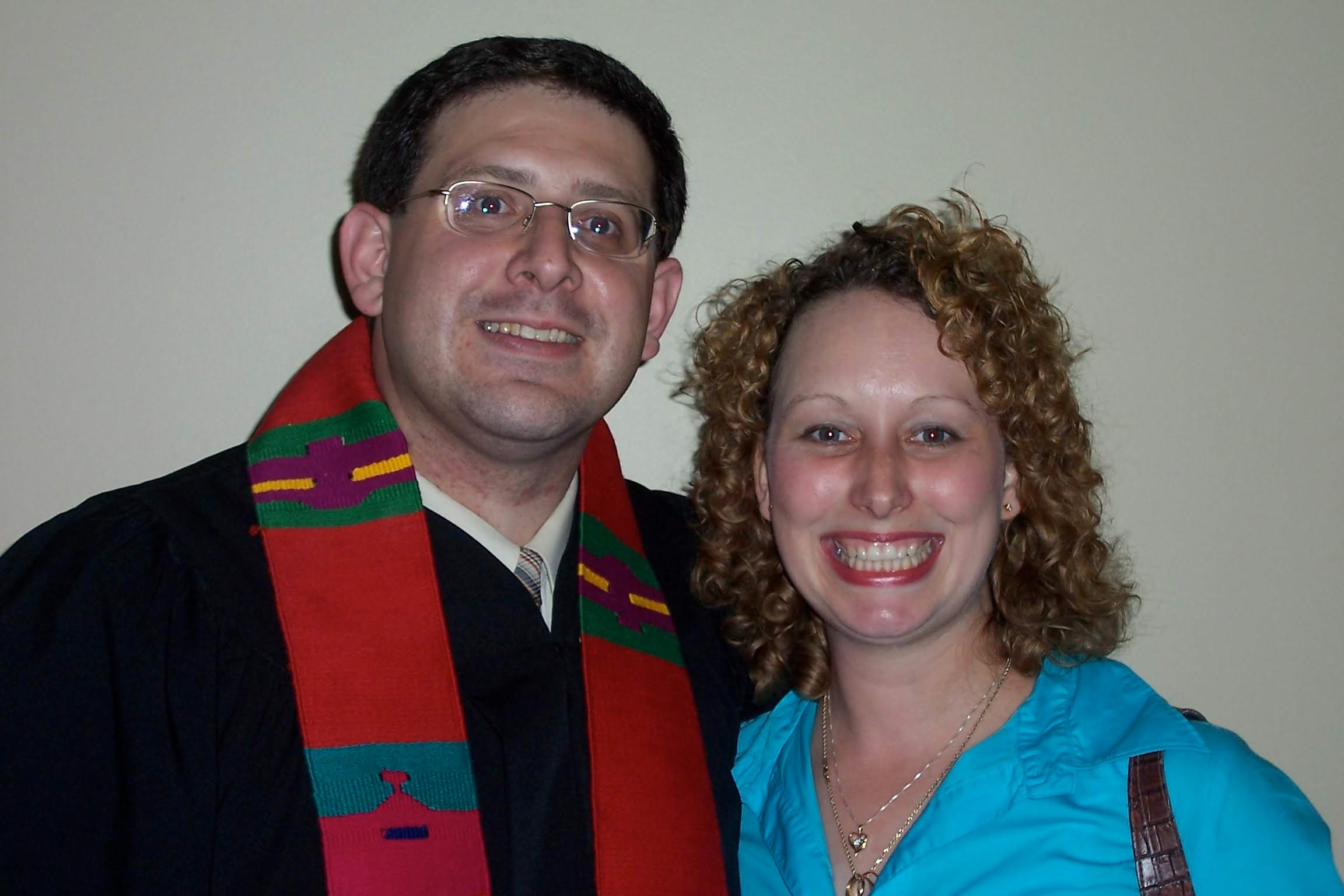
That’s a key part of life in the military and in the United Methodist Church. We go where we are sent. The picture above was taken on June 13, 2006. This would have been my daughter’s second birthday, and it was also the night I was ordained and an Elder in Full Connection within the United Methodist Church. It was in that service that I took my vow of Word, Sacrament, and Order. In other words, I promised to preach the word, administer the sacraments, and order the church via our shared life together as found in the Book of Discipline.
In regular language, that means to preach, to baptize, serve communion, and help to organize our life together. Part of “life together” as United Methodists is our connectional nature.
The United Methodist Church is a connectional church. Some have said that the only thing all Methodists share in common is that connection. One would hope that we would share more than just a common polity and organization, but there is no denying that one of the most “Methodist” things that we have is connection. That connection is also our greatest strength.
This connection defines who we are. One thing all of us as United Methodists agree to adhere to is that connection. The connection affects not only the clergy, but all the laity and local churches as well. The very phrase “local church” in itself shows the connectional nature of the United Methodist Church. Each church is a local church, not the “church.” It is a local extension of the greater church, and that means that each local church is connected to that greater church.
This has always been our tradition as Methodists. Within the early days of Methodism, the connection between the local societies was John Wesley himself. He would ride from town to town preaching and organizing. Societies were linked through him. This early linking of the societies through Wesley was the beginning of the connection. Today’s connection has been passed down through the tradition of Wesley, but it also has theological and practical causes and applications.
The theological foundation of this connection is that the Church is one. There is one Lord, Jesus Christ, and one body, the Church. We affirm this through our Creeds and doctrine. Practically, this is seen in what is called the trust clause. Through this, all property of the local church is held in trust by that local church and deeded to the annual conference. This trust clause was originally established by John Wesley. It was done to ensure the Methodist preaching houses were actually Methodist and that the church was holding to established doctrinal standards. It was determined which preachers were to be sent to which houses, and with the houses deeded to Wesley, they had to accept the preacher that he sent, and that ensured that correct Methodist doctrine was being preached.
This trust was originally established to ensure the standards were upheld, and today it ensures that the local church will accept the preacher it is sent and that the Discipline is being followed. While originally established to ensure that Wesley’s standards were upheld, today this deed does much more than that. Today, it shows the connected nature of our church. Each local church, by its very nature, is linked and has to stand as a part of the greater whole.
The Bishop and Cabinet, as Wesley did, seek to match the needs of the local church with the gifts of the pastors within that Conference. Because of this, we preachers must be sent. We find Biblical foundations for this in Acts 13:1-3. There, the church “sent out” Paul and Barbabas for ministry:
Now in the church at Antioch there were prophets and teachers: Barnabas, Simeon who was called Niger, Lucius of Cyrene, Manaen a childhood friend of Herod the ruler, and Saul. While they were worshiping the Lord and fasting, the Holy Spirit said, “Set apart for me Barnabas and Saul for the work to which I have called them.” Then after fasting and praying they laid their hands on them and sent them off.
We call this “sent-ness” itinerancy. Preachers itinerate, going where they are sent by the bishop. This shows once again the connectional nature of our church. The preachers are not members of a local church; rather, they are members of the annual conference to which they belong, which sends them to local churches within its scope. This is how Wesley did it, this the UMC has done it, and this is how we do it now. It is who we are. It makes me think of the line from The Godfather 2 from Hyman Roth
…and I said to myself, this is the business we’ve chosen.
So, just like my military friends, I go where I am sent. It is the promise I made to God. Our system is not the only one, but it is the one we are part of. It reminds me of a quote from Winston Churchill:
Many forms of Government have been tried, and will be tried in this world of sin and woe. No one pretends that democracy is perfect or all-wise. Indeed it has been said that democracy is the worst form of Government except for all those other forms that have been tried from time to time.
While it may not be perfect, it is who we are. And each place I have ever been sent has blessed me and taught me something. And I pray, through God’s grace, I have taught them each something and been a blessing. I am better for each church, and I hope each church is better because of me. I have seen God use it, and I know that God will use it again, for me, and for us, and for all our churches, once again.