


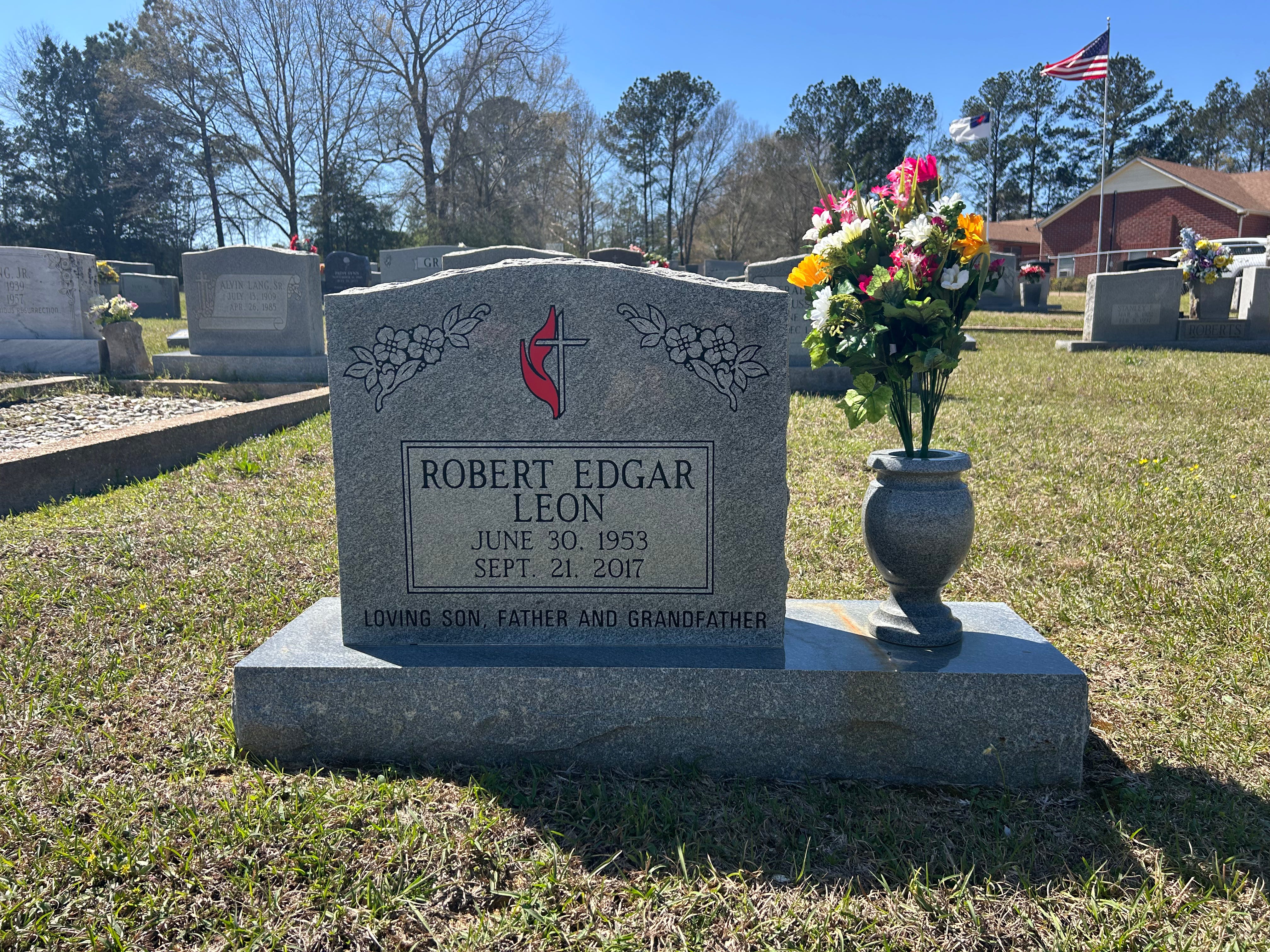
As a kid, I used to joke that I was the only Methodist I knew. There weren’t many Methodists (of any stripe) at my school, and most of my church friends went to another school. As a teenager, looking for identity and uniqueness, that Methodist identity became a key part of who I was. In some ways, at that point I felt like I was more proud of being a Methodist than I was of being a Christian. As I grew spiritually and theologically, that Methodist identity, but especially as I came to understand it as my United Methodist identity, became even more a part of who I was. When my wife and I were engaged, we struggled at one point about whether we were actually going to get married. She (like everyone else in Mississippi) was Baptist, and I was a United Methodist pastor. And you know what United Methodist pastors do to their babies? They baptize them. To a good Southern Baptist, that’s a lot. So, we had to figure that out. But I wasn’t going to leave my identity as a United Methodist or my call as a pastor. It was too much a part of my family and me. A few months after we were married, my wife told me that if something ever happened to me, she’d stay United Methodist. It is a core part of who we are. When my brother died, the United Methodist cross and flame is actually on his tombstone. It reminds me of an old saying I’ve heard (with a little addition from me): (United) Methodist born, (United) Methodist bred, and when I die, I’m (United) Methodist dead.
We are a few years out from what I jokingly call the “Methapocalypse” when many United Methodist Churches had moments of decisions and votes. I have zero, none, no desire to relive anything that involved the disaffiliation process within the UMC. Some churches were very fortunate and did not have a vote, or if they did, the church had a real sense of unity and clarity. Others had very painful votes that resulted in the church being ruptured and relationships being forever changed.
But a few years out, we find ourselves where we find ourselves. As I mentioned above, I have no real desire to explore the recent past. But I have been thinking about something. I find myself as a 50-year-old pastor of a First UMC in an SEC town. My United Methodist identity remains as strong as it ever has. I deeply love THE church; I deeply love my Annual Conference, and I do, warts and all, love the United Methodist Church. Sometimes it reminds me of the famous line uttered by Churchill about democracy:
Indeed, it has been said that democracy is the worst form of Government except for all those other forms that have been tried from time to time.
The UMC is a terrible system and is broken in many ways. Yet I find it better for me than other forms of church.
But here is a problem. I am not convinced we've given an adequate reason or vision of why someone would want to be a United Methodist. We’ve encouraged and celebrated people who stayed, but that often seems to be based on institutional survival, and a story of survival is not a compelling story. We have talked a lot about Good Friday. We need to talk about Easter. I want to talk for a minute about why I love this church. Why are we here? Why should you want to be us? What does this identity mean, and why does this membership matter? I believe in this church. Why is that? Why do I have that hope? Why do I really believe in the United Methodist Church, and am proud to be an Elder within it? Here are a few reasons.
The first is something I’ve talked about before: our theological method as understood by the Wesleyan Quadrilateral. I believe the way we do theology produces the kind of Christian I’d like to be when I grow up: graceful, service-oriented, intellectual, and Christ-centered. In short, our method is this. We interpret the Bible through the lens of reason, tradition, and experience. What is so beautiful about this is that if we swing too strongly to any of those four tent poles, we’ll be off-center. The Bible is primary; it is the inspired word of God, our source for truth and revelation (we’ll talk more about it in a second). But we interpret it. We all do. If we read only the Bible without tradition, reason, or experience, we would still be interpreting it, but our interpretation would be our personal lens. We need the wider lens of each to understand it better.
But likewise, we do not want to swing too strongly to tradition, or experience, or reason, apart from the other understandings. We need to have a balance between these, which then helps us rightly understand Scripture. This method, or seeing Scripture through these lenses, I believe, truly produces a moderate, balanced understanding of God’s word and forms that type of theology.
And I think this theological method best produces the kind of Christian I’d like to be. I’ve seen these types of Christians in United Methodist churches across our state and nation. Across different races, genders, socioeconomic classes, and any other label you could think of. What do they have in common? This method of understanding.
Another strength of who we are is our understanding of Scripture. I really like how our Book of Discipline states it in one of our foundational theological statements:
We believe the Holy Bible, Old and New Testaments, reveals the Word of God so far as it is necessary for our salvation. It is to be received through the Holy Spirit as the true rule and guide for faith and practice. Whatever is not revealed in or established by the Holy Scriptures is not to be made an article of faith nor is it to be taught as essential to salvation.
Scripture teaches everything needful for Salvation. That is its purpose. I tell people this is the Bible. Genesis 1 and 2, our creation. Genesis 3, the Fall that corrupts all of creation, humanity included. Genesis 4 through the end of the Bible: God’s plan to restore all of creation through covenant, or relationship. That’s what Scripture is for. It is true, and it contains truth. But it is not a collection of all world knowledge or history. It has a specific purpose, for which it is perfect, to show us who we are and how we are saved. As John 20: 31 tells us:
But these are written so that you may continue to believe that Jesus is the Messiah, the Son of God, and that through believing you may have life in his name.
This theological understanding produces truly Christ-centered disciples. These folks, produced by our United Methodist way of life, are the kind of folks who interpret the Bible, and all of life, through Jesus Christ. Colossians 1:15 tells us:
He is the image of the invisible God, the firstborn of all creation
If you want to know the Father, look to the Son. Our method tries to help us center everything in and through Jesus. Everything- scripture, worship, service- is about and points to Jesus. Jesus is, and must be, the ultimate lens through which we see the world. I want to interpret the Bible through Jesus. I want to see my neighbor through the lens of Jesus. I want to see my enemy through the lens of Jesus. I want Jesus to be my very center of life and being.
As my people often hear me say. It’s always, only about Jesus.
As United Methodists, as we center on Christ, we grow through His grace, experienced throughout all of our lives, but especially through the Sacraments (Communion and Baptism) and the Means of Grace (Scripture, Prayer, Communion, Fasting, and Conferencing). This growth leads to holiness, and we understand that holiness as perfect love. We strive for perfect action. But we must have perfect love. Because here’s the thing. Perfect action will not always be rooted in perfect love. But perfect love will show itself in perfect action. And it is that love that matters. As 1 Corinthians 13 tells us
If I speak in the tongues of humans and of angels but do not have love, I am a noisy gong or a clanging cymbal. And if I have prophetic powers and understand all mysteries and all knowledge and if I have all faith so as to remove mountains but do not have love, I am nothing. If I give away all my possessions and if I hand over my body so that I may boast but do not have love, I gain nothing.
This perfect love shows itself in several paths that are so important to our lives as United Methodists. We truly value diversity. I remember a recent conversation I was part of with other United Methodist leaders across the state of Mississippi. The question was posed: What do we offer that no one else does? As I sat with that question, I felt it deep within me, and I responded, “If we live our vision, we can be the only truly interracial unified body in the State of Mississippi.” That is what we offer, especially in the context of my home state. We will not be a place that doesn’t see color. We will see color, because color shapes our experience. As a middle-aged, gray-haired male, I cannot say that my experience is the same as a young African-American male or young Hispanic woman. I don’t want to pretend it’s the same. In fact, quite the opposite. I am, and all of us are, better when each of these perspectives and lived experiences can voice what they have seen to be true. When we do it right, as United Methodists, we can do just this. We can love despite our differences. When Jesus is in the center, our diversity is truly a gift. But we must keep Him in the middle, or we will destroy each other.
We can show people what unity in Christ truly looks like. But we value this - unity, not uniformity. We focus on loving alike, not always thinking alike. We believe and strive to live out unity and diversity that transcends every human line of division - race, politics, gender, borders, every human condition or orientation—for God so loved the world. That means everyone. I want a church full of all kinds of people, white, black, liberal, conservative, everyone.
We are an egalitarian church, valuing the call and giftedness of both men and women in every part of the life of the church. Our calling flows from our baptism. It is that mark of God’s grace in our baptism that is the foundation of that call to ministry. All baptized members are called to ministry and service, whether it be lay service to our church or full-time vocational and ordained ministry. If we would not allow females to enter into that full vocational ministry, then we should not baptize female children. Ministry is an extension of our baptism. All can be baptized, so all can serve.
Now there are so many other things we do well: our liturgy, our social holiness and evangelism, and our leaning into life with grace, not judgment. Others do that as well, so I want to focus on some of our theological distinctives that shape our way of life.
In the end, our way of life produces a moderate, practical people. Our moderation shows itself in our desire to maintain relationships above ideology. Our practicality shows itself in how much we want to be truly faithful and change the world for God. I want to focus on what works and what makes a difference. I want to focus on Jesus, not ideology. I want to focus on all the world knowing Him. I believe, deep in my soul, in the importance of evangelism. People need this. They need Jesus; they need this hope, and I really do believe that the way of life that we live out as United Methodists is the most beautiful, graceful path that we can walk. That is why I take evangelism so very seriously. We need this.
And friends, that is why I think the United Methodist vision is so compelling. When we are at our best, truly living out our identity and calling, we are a church radically focused on loving God and neighbor with every fiber of being. A church not driven by the cultural winds of division but a church focused solely on loving everyone we meet with the love of Jesus Christ. As CS Lewis said in The Weight of Glory:
Next to the Blessed Sacrament itself, your neighbour is the holiest object presented to your senses.
We are called to love. Love God and Neighbor. That’s who we are. That’s our vision. That’s what I truly believe in.
(United) Methodist born, (United) Methodist bred, and when I die, I’m (United) Methodist dead.
As imperfect as we are, these are my people.